

Skip to main content

S-Lab - Utku Turk

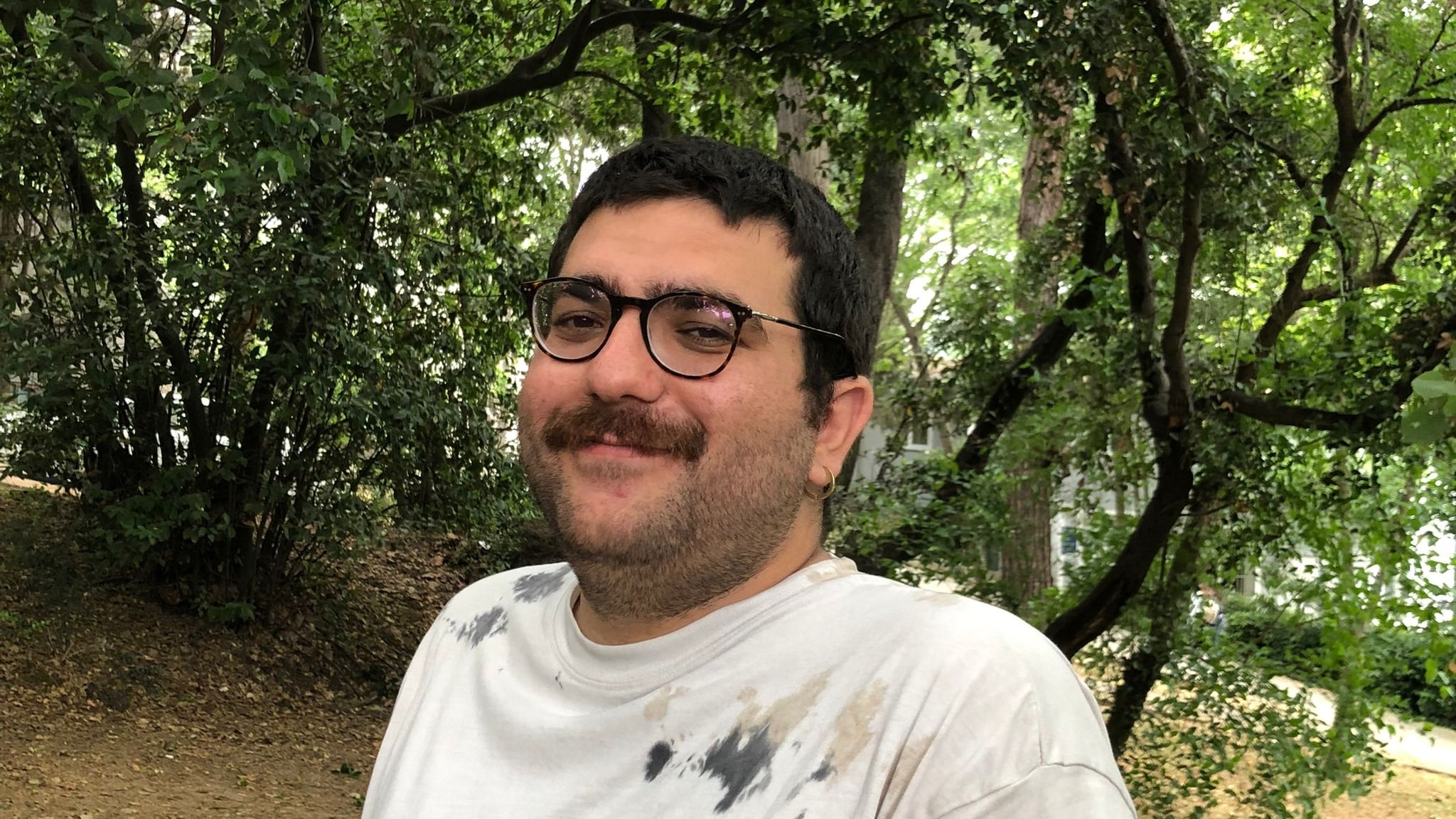
Portrait of Utku Turk, PhD student in Linguistics.

S-Lab - Utku Turk

Linguistics Tuesday, January 30, 2024 4:00 pm - 5:00 pm Marie Mount Hall, 1108B

Tuesday January 30, the first S-Lab of the semester has Utku Turk on what is called 'suspended affixation' in Turkish, with a presentation titled "Controlling morphosyntactic competition through phonology", abstracted below.


I will be discussing a case of suspended affixation (SA) in Turkish and its unexpected interaction with suppletive morphology. SA is a phenomenon in which a certain affix(es) is affixed to the periphery of the coordination but interpreted for all coordinates, and it is analyzed with a deletion analysis where the affix(es) on the first conjunct is deleted after coordination. While it usually has an easy-going relation with phonology (deletion before phonology), the case with suppletion is a funny one. Erschler (2018) showed that non-word remnants are banned in Ossetic SA environments; yet, Guseva and Weisser (2018) demonstrated the exact opposite with Mari, creating a problematic picture for a uniform analysis of SA. Turkish provides a different picture. While non-words remnants are not allowed in Turkish, the distribution of SA with respect to non-harmonizing conjuncts and other pronominals tells us that the process of SA should involve both phonological and structural constraints at the same time.

Add to Calendar 01/30/24 16:00:00 01/30/24 17:00:00 America/New_York S-Lab - Utku Turk

Tuesday January 30, the first S-Lab of the semester has Utku Turk on what is called 'suspended affixation' in Turkish, with a presentation titled "Controlling morphosyntactic competition through phonology", abstracted below.


I will be discussing a case of suspended affixation (SA) in Turkish and its unexpected interaction with suppletive morphology. SA is a phenomenon in which a certain affix(es) is affixed to the periphery of the coordination but interpreted for all coordinates, and it is analyzed with a deletion analysis where the affix(es) on the first conjunct is deleted after coordination. While it usually has an easy-going relation with phonology (deletion before phonology), the case with suppletion is a funny one. Erschler (2018) showed that non-word remnants are banned in Ossetic SA environments; yet, Guseva and Weisser (2018) demonstrated the exact opposite with Mari, creating a problematic picture for a uniform analysis of SA. Turkish provides a different picture. While non-words remnants are not allowed in Turkish, the distribution of SA with respect to non-harmonizing conjuncts and other pronominals tells us that the process of SA should involve both phonological and structural constraints at the same time.

Marie Mount Hall false