

Ellen in Saarbrücken
November 18, 2026
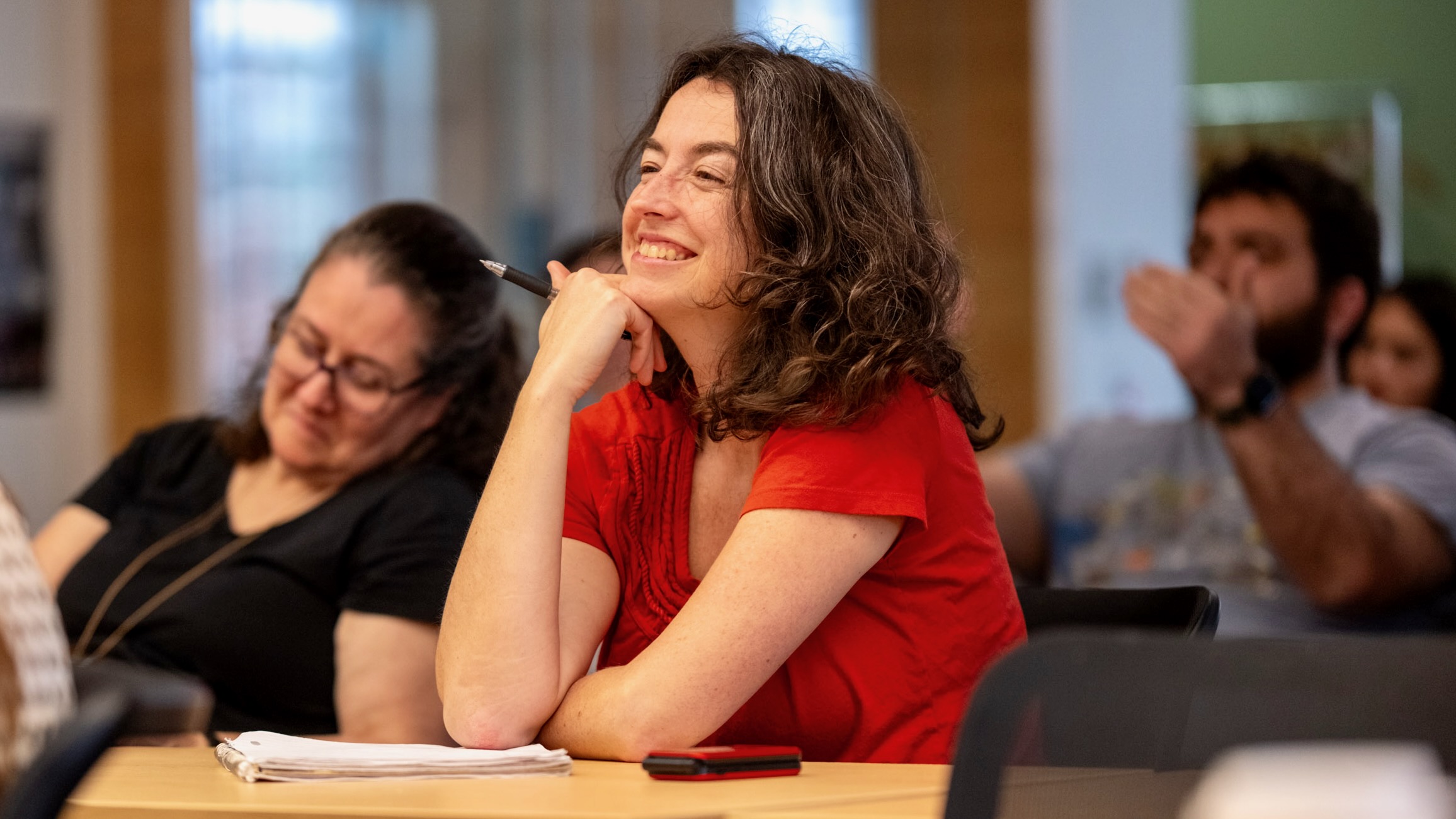
Structured mappings in production, comprehension, and non-linguistic knowledge.
November 19, Ellen is in Saarbrücken, an hour east of Metz, at Saarland University, presenting her work at "Distinguished Speakers in Language Science," the joint colloquium of its Center for Language, Cognition and Computation and its Department of Language Science and Technology. Her talk, abstracted below, is "Against isolated items and individuals: Structured mappings in production, comprehension, and non-linguistic knowledge".
Since the early 20th century, both number theory and neural network theory have inspired cognitive scientists to conceive perception and cognition in terms of isolated items and individuals--individual feature detectors which can be activated in different patterns to yield different results; individual lexical items which are activated in the course of language production and comprehension; the domain of individuals which sentences can assert true or false statements about. In this talk I will argue that moving away from the isolated item metaphor can yield better models of language processing and interpretation. Recognizing that language production and comprehension require distinct, non-invertible mappings between complex data structures rather than activating a common set of bundled 'items' can allow us to make better sense of cross-linguistic diversity, the prevalence of so-called 'idiomatic' non 1-to-1 mappings, and dissociations between production and comprehension in behavioral and neural responses (e.g., Krauska & Lau, 2023). With respect to non-linguistic knowledge, I adopt Sandeep Prasada's (2026) arguments that humans do not mentally represent individuals as isolated entities or lists of features, but rather make use of instance-of-kind conceptual structures that inherently relate instances to a kind. This kind of data structure explains how humans reason about and organize long-term knowledge of individuals, and motivates new approaches to the semantics of common nouns, quantification, and adjectival modification.