

Work by Elizabeth, Katherine and Valentine in Budapest
January 27, 2026
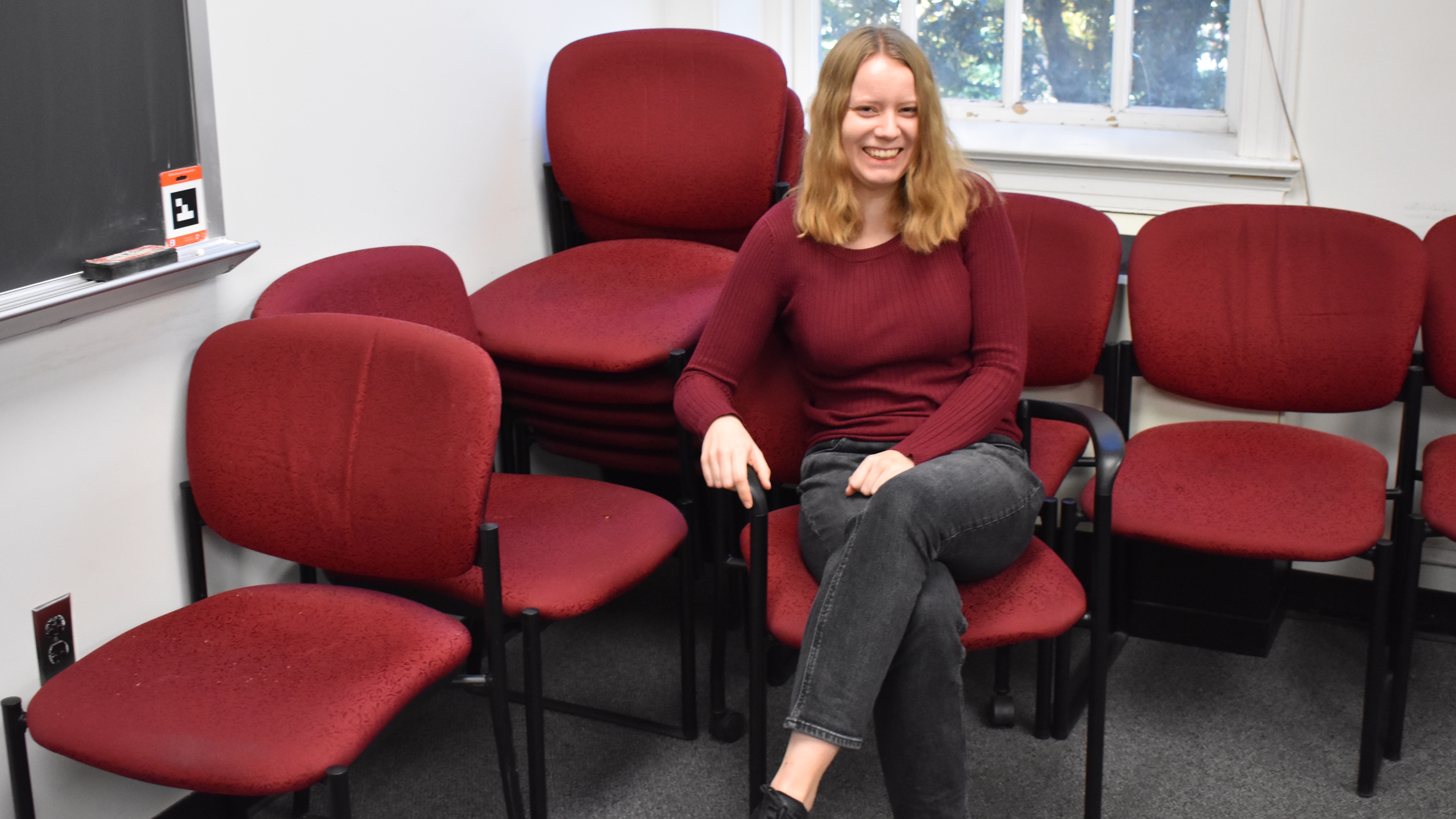
Probing epistemic and non-epistemic modal reasoning in 4- and 5-year-olds.
January 15-17 at the 16th annual Budapest CEU Conference on Cognitive Development, Elizabeth Swanson presents joint work with Katherine Howitt and Valentine Hacquard, "Probing epistemic and non-epistemic modal reasoning in 4- and 5-year-olds," abstracted below. Also featured at the conference, a "Mulled Wine Reception" on the "Rooftop Terrace", and a "Gala Dinner" whose listed time is 20:00-3:00 – all along the beautiful Danube river, which separates the hills of Buda from the plains of Pest.
Previous studies disagree about whether children show delays in their understanding of settled but unknown possibilities (epistemic, e.g. It might be raining), compared to future, unsettled possibilities (metaphysical, e.g. It might rain) [1-7]. Our study hones in on the role of settledness while eliminating a potential confound: the need for the child to represent the experimenter’s epistemic state. We find no difference in 4- and 5-year-olds’ ability to prepare for epistemic vs. metaphysical possibilities. We asked children to place trays beneath gumball machines to catch gumballs. On critical trials, the machine had green and yellow gumballs; gumballs always came out of the color-matched chute (Fig.1). Children either placed trays before the coin was turned to select a ball (metaphysical condition) or after the coin was turned and they heard a ball drop, but couldn’t see its color (epistemic condition). In both conditions, the expected adult-like response was preparing for either ball to fall, and thus placing two trays. Children (mean age=4;11, range=4;0–5;11) saw a total of 8 critical trials, 4 epistemic. Children (N=34, target N=48) consistently placed fewer trays than adults (N=18), but neither group differed significantly by condition in number of trays placed (p>0.05) (Fig.2&Fig.3). Our findings suggest that while children sometimes fail to prepare for two possibilities, this behavior is not mediated by epistemic vs. non-epistemic reasoning. This aligns with recent work questioning whether children in fact do show a cognitive delay for epistemic reasoning and language [3,5]. Prior studies that find a difference likely conflated children’s epistemic reasoning abilities with task effects associated with experimenter knowledge. A follow up study (in progress) seeks to further explain when children fail and succeed at deploying their knowledge of epistemic and metaphysical possibilities.